
Introduction: A Neighborhood with Deep Roots
Nestled in the heart of North Sacramento, Natomas Crossing is a modern, vibrant neighborhood that boasts a unique blend of history and innovation. Just off Interstate 5 and bordered by the Natomas Marketplace and Truxel Road, this bustling community is more than just a convenient hub—it’s a place where local heritage and new growth seamlessly blend. As a resident who has witnessed Natomas Crossing’s continued evolution, I’m excited to share the stories and landmarks that have shaped its character over the decades.
How Natomas Crossing Got Its Name
The roots of the Natomas Crossing name dip back to the area’s Native American and agricultural history. “Natomas” likely originates from the local Nisenan language, meaning “north place” or “upstream.” For centuries, the rich delta soils made this a vital area for seasonal settlements and later for farmers. The “Crossing” portion of the neighborhood’s name refers to both its key transportation routes—where modern highways like I-80, I-5, and State Route 99 intersect—and the historic crossing points for trade and migration in the Sacramento Valley.
From Swamps and Farms to Suburban Dreams
In the late 1800s and well into the early 20th century, the land we now call Natomas Crossing was a patchwork of farmland, swampland, and ranches. Early settlers transformed the environment by building levees and irrigation ditches, converting flood-prone land into productive fields.
- American River levees were fortified in the 1910s and 1920s.
- Northgate Boulevard, once a rural route, slowly became a vital commercial spine for the north Sacramento area.
- The expansion of the Sacramento Northern Railroad in the early 1900s further boosted access, trade, and population growth.
During much of the mid-20th century, this part of Natomas remained relatively underdeveloped, serving as agricultural land on the edges of a growing capital city.
Suburban Vision: The Birth of Natomas Crossing
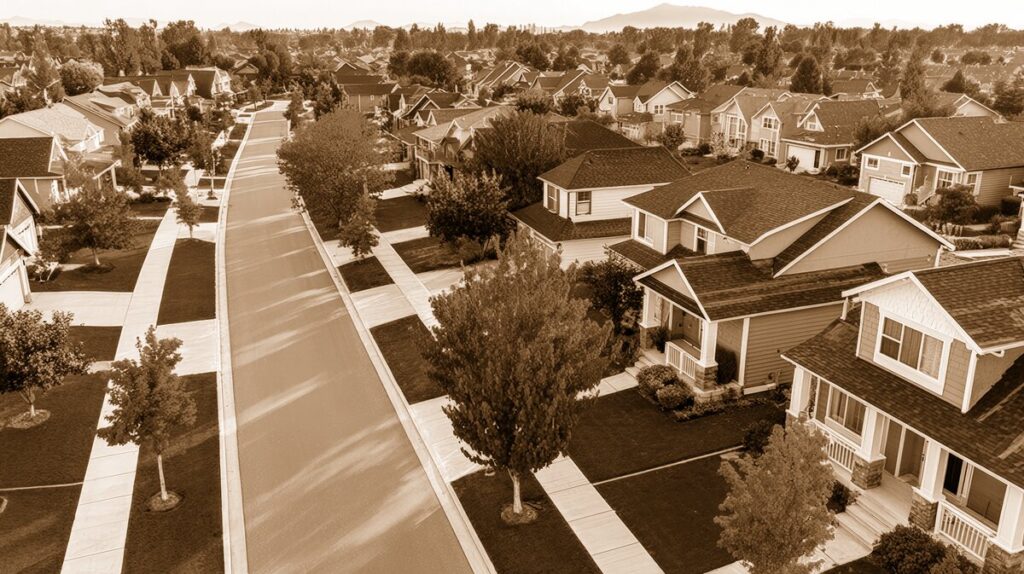
The transformation from farmland to suburban community began in earnest in the late 1980s and 1990s. With Sacramento experiencing a population boom, developers recognized the potential of Natomas’s wide-open tracts. Natomas Crossing’s modern story is marked by rapid construction and thoughtful planning designed to create a vibrant, walkable community with easy access to downtown Sacramento and the Sacramento International Airport.
- Streets like Gateway Park Boulevard, E. Commerce Way, and Del Paso Road became the backbone of the new neighborhood.
- Planned green spaces, such as the North Natomas Regional Park and Tanzanite Community Park, were built to provide residents with ample recreation opportunities and community gathering spaces.
- The Natomas Unified School District opened new schools, including Natomas Park Elementary and Heron School, emphasizing educational excellence as a cornerstone of community life.
Landmarks and Hidden Gems
While Natomas Crossing may lack the century-old Victorians of Midtown, it has its own distinctive landmarks that reveal stories of growth and resilience:
- Sleep Train Arena (formerly ARCO Arena): Just north of the neighborhood, ARCO Arena opened in 1988 as the home of the Sacramento Kings. For decades, it drew cheers, concerts, and excitement to Natomas. Though the arena was decommissioned in 2016, its legacy lives on, with redevelopment plans for a future medical campus.
- Natomas Marketplace: With anchor stores like Target and Best Buy, this outdoor shopping center became a retail hub and meeting place for locals. Lively restaurants and cafes dotted around the center bring together people from all over Sacramento.
- Jackrabbits Stadium and North Natomas Regional Park: Home to weekend soccer matches, little league games, and summer festivals, these green spaces are the heart of Natomas Crossing’s community spirit.
The Cultural Tapestry: People and Progress
What truly sets Natomas Crossing apart is its vibrant, multicultural community. Early growth brought families from across California and beyond, drawn by affordable homes, quality schools, and the neighborhood’s proximity to both downtown and the airport. Restaurants serving Mexican, Vietnamese, Indian, and contemporary American cuisine line Del Paso Road, reflecting the area’s diverse palate.
Neighbors often gather at seasonal farmers’ markets or outdoor movie nights in North Natomas Regional Park, making the most of Sacramento’s famous sunshine and sense of camaraderie.
A Neighborhood Always Adapting
Natomas Crossing is still a neighborhood in motion. The last two decades have seen an influx of new apartment communities, state-of-the-art office parks, and expanded retail. Recent infrastructure improvements—like the widening of Truxel Road and the growth of bike trails—underline the area’s commitment to sustainable, connected living.
Meanwhile, Sacramento International Airport’s close proximity continues to attract new businesses and residents, making Natomas Crossing one of the city’s fastest-growing corridors.
- Newer schools and expanded community programming keep the neighborhood family-friendly.
- The community association has taken an active role in public safety, green initiatives, and traffic management.
Remembering and Honoring Heritage
While new development often overshadows the past, there are still reminders of Natomas Crossing’s agricultural—and indigenous—roots. The community pays homage to its heritage through:
- Interpretive signs in local parks sharing the history of levee building and Native American settlements.
- Community events, such as Natomas Days, featuring local artisans, historical displays, and food trucks.
- Ongoing conversations about honoring the region’s earliest inhabitants and their stewardship of the land.
Why Natomas Crossing Endures
Natomas Crossing perfectly encapsulates Sacramento’s spirit: always growing, rooted in history, and ever welcoming to new faces. Residents—whether they’re newcomers or multi-generation Sacramentans—find a sense of belonging among tree-lined streets, vibrant parks, and a neighborly energy that makes every day feel a little bit like homecoming.
From its humble beginnings as marshland to its place as a thriving urban enclave, Natomas Crossing’s story is still being written—one block, one family, one celebration at a time.